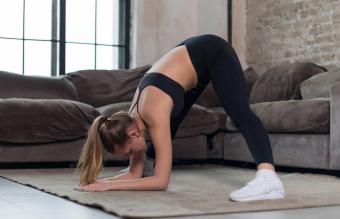
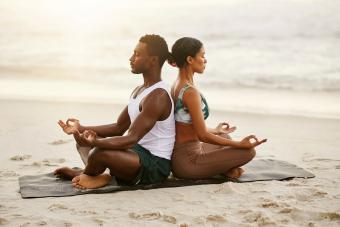
Bikram yoga uses extreme heat to purge toxins from the body, helping the practitioner achieve a cleansing of the mind and body from the inside. The authentic form of Bikram yoga originated with yogi Bikram Choudhury in 1974. Choudhury developed a series of 26 asanas to be performed in a particular sequence in a heated room of 80-105 degrees Fahrenheit. The classes are usually 90 minutes long and include specialized breathing exercises as well.
Bringing the Mind Back to the Brain
In a 2005 interview with 60 Minutes, Choudhury explained that this form of yoga is not the sit quietly and stare at the wall type. "You use the body as a medium to bring the mind back to the brain." The history of his yoga journey and his philosophy about the practice are explained in more detail on his website, but it is clear that there is more to this style of yoga than physical fitness and relaxation.
Benefits of Bikram
Because Bikram yoga is a form of cardio that also uses your body weight as resistance without incorporating the high impact of running, for example, there are several benefits of Bikram yoga:
- Bikram yoga classes, which last 90 minutes, are an incredible cardiovascular workout.
- The lymphatic system is detoxified not only by the poses, but also through extensive sweating. Regular detoxifying helps the system work more effectively.
- Many practitioners report relief from symptoms of chronic illnesses such as fibromyalgia, fatigue, insomnia, depression, migraines, and arthritis.
- Many people also use Bikram in injury recovery as a form of physical therapy, as well as a method to ease the discomfort of past injuries.
How Many Calories Does Bikram Yoga Burn?
If you practice the Bikram sequence of 26 asanas for 90 minutes and perform at or near your maximum heart rate, you're going to burn hundreds of calories - approximately 400-700 calories.
To get an estimate of how many calories you burn during a Bikram yoga session, calculate your heart rate. Use this formula: 220- your age x 60 percent and x 90 percent. For example, a 38-year old would calculate her target zone this way: 220-38=182. 182x.60=109 (minimum heart rate) and 182x.90=163.8 (maximum heart rate).
The Benefits of Heat
Most forms of yoga are best performed in a warm setting. However, Bikram yoga integrates the highly heated room into the practice, making the heat as necessary a component for success as proper form during asanas and breathing. With a thoroughly warmed body, practitioners can go deeper into the poses to maximize the effects.
According to Bikram, the heat extends the ability of the ligaments, tendons, and muscles and makes the practitioner work up an intense sweat.
The Difference Between Hot and Bikram Yoga
Choudhury is an instructor of Bikram yoga and authorizes other yoga instructors to teach it but has been involved in lawsuits with yoga studios that advertise this style of yoga without using Choudhury's exact methodology or certified Bikram yoga instructors. All studios that state they are Bikram studios must feature only this style and nothing else, and all teachers at that studio must be certified in this style.
Many yoga studios promote hot yoga, which is a form of Hatha yoga performed in a heated room. Practitioners of this style still experience toxin release benefits, but may not be aware of Choudhury's philosophy or exact practice.
Cautions
Like many yogic postures, Bikram asanas are broken down into purposeful movements. Within reason, anyone at any age can perform the poses, but this style of yoga does require the practitioner to be in better physical condition and have a high tolerance for heat. Keep these cautions in mind:
- It is critical to keep the body hydrated before, during and after practice. Along with the recommended eight-to-ten glasses of water daily, yogis practicing this form must consume enough water to replenish the body because of the excessive sweating. Practitioners are advised to drink up to 16 ounces of water two hours before a Bikram yoga session and up to 40 additional ounces during and after the session.
- Some practitioners believe this should not be the first choice of yoga for a beginner. Rather, it is one to learn once someone has mastered the basics of Hatha yoga.
- Please also note that practicing Bikram yoga is generally not advisable if you're pregnant, as it raises the core body temperature to levels that may be harmful to the baby. Talk with your health practitioner and your Bikram instructor regarding other forms of yoga that are safer to perform until the baby arrives.
Bikram Classes and Books
Before starting any form of exercise, talk with your physician and research the practice. In addition, it's always best to first perform any yoga path under the guidance of an experienced teacher, who will not only teach you about the history and theory of the style, but also instruct and correct your postures and other physical attributes important to the practice and to avoid injury.
In addition to checking with a local fitness club or spa, you can find certified Bikram yoga classes and teachers in your area using Yogafinder or Yoga Meetup.
Choudhury has not released much in the way of multimedia on his practice, but Bikram's Beginning Yoga Class Book may prove to be helpful during home study. Not only an introduction to the method, this book also demonstrates how a yogi will eventually master a pose and the steps it takes to reach that level.
A Journey of Many Steps
The practice of yoga is a journey of many steps. Take the time to teach your body the motions and your mind the methodology of Bikram yoga.